When Noor Singla, a student from Patiala, secured All India Rank 1 in the Chartered Accountancy Final exam, she didn't just pass—she dominated. On June 18, 2026, the Institute of Chartered Accountants of India (ICAI) released results that sent shockwaves through the accounting community: only 12% of candidates cleared Group I, yet Noor scored a staggering 499 out of 600 marks.
The twist is how rare this achievement truly is. In an exam known for its brutal difficulty and low pass rates, scoring above 83% isn't just good—it's historic. Here’s what happened on the day the results dropped, who else made the podium, and why this particular session has everyone talking about the changing landscape of professional education in India.
A Historic Performance in Patiala
Let’s get straight to the numbers. Noor Singla didn’t just scrape by; she achieved an aggregate of 83.17%, landing her firmly at the top of the national merit list. For context, the CA Final exam is widely considered one of the toughest professional certifications globally. To score nearly half the total possible marks requires not just knowledge, but precision under pressure.
Her victory was celebrated across social media platforms, with reels and posts highlighting her journey from Patiala to the national stage. One viral post noted that she had “created history,” a sentiment echoed by educators who point out that female representation at the very top of such competitive exams remains a significant milestone. Her success story serves as a powerful reminder that talent knows no geographic boundaries.
The Podium: Who Came Second and Third?
While Noor took the crown, the competition behind her was fierce. The second spot went to Ritij Saraf from Howrah, who secured 475 marks (79.17%). Close behind was Sohan Anil Manjrekar from Dombivli, scoring 473 marks (78.83%).
- AIR 1: Noor Singla (Patiala) – 499 Marks / 83.17%
- AIR 2: Ritij Saraf (Howrah) – 475 Marks / 79.17%
- AIR 3: Sohan Anil Manjrekar (Dombivli) – 473 Marks / 78.83%
Interestingly, there was some minor confusion online regarding Sohan’s name spelling, with some sources listing it as "Sonhan," but official records confirm the correct spelling. These three students represent different regions of India—from Punjab to West Bengal to Maharashtra—showcasing the nationwide reach of high-performance accounting talent.
The Brutal Reality of Pass Rates
Here’s the thing that puts these scores into perspective: the exam itself was incredibly hard. Reports indicate that only 12% of candidates passed CA Final Group I in this attempt. That means for every student who succeeded, roughly eight did not. With 54,606 students appearing for Group I alone, the sheer volume of aspirants makes the low pass rate even more striking.
This wasn’t just a tough month; it was statistically the lowest pass percentage for Group I in recent memory. Experts suggest that the question paper likely included complex practical applications rather than rote memorization tests, filtering out those who hadn’t truly mastered the material. It’s a harsh filter, but one that maintains the prestige of the CA designation.
How Candidates Accessed Their Results
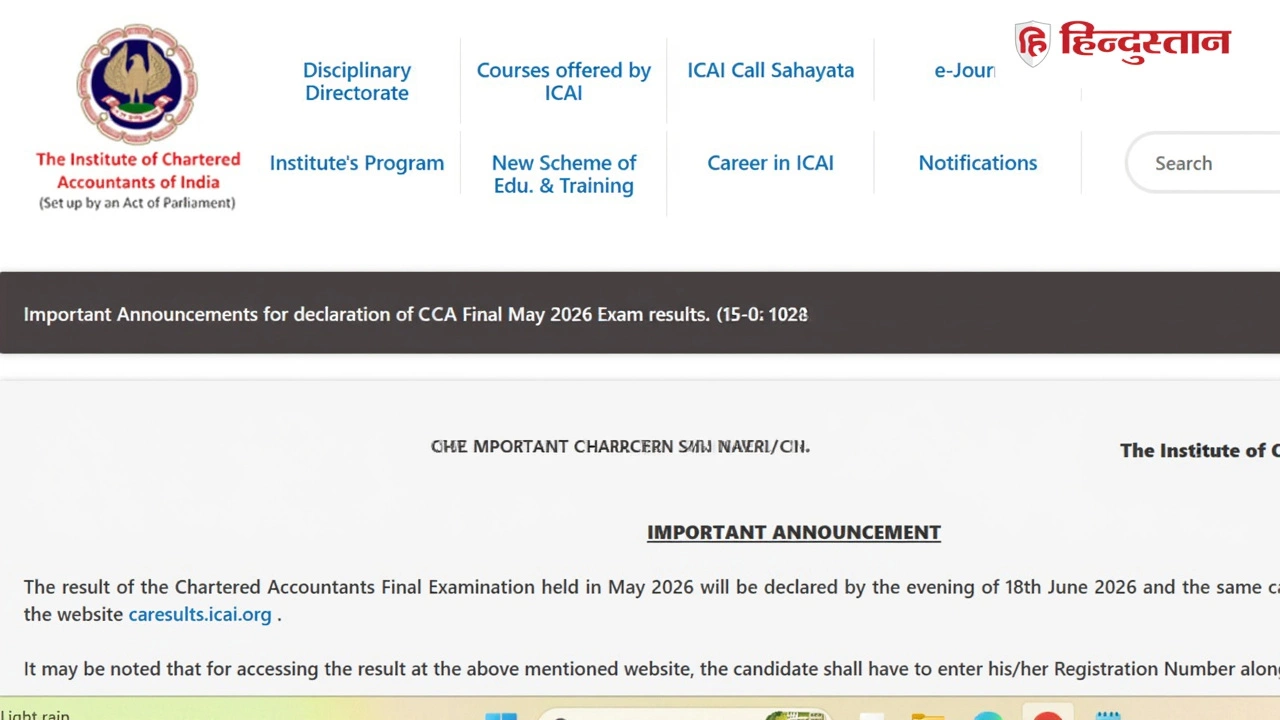
On June 18, thousands of anxious students logged onto the ICAI portal. The process was straightforward but tense: enter your roll number and registration number, wait for the page to load, and hope for the best. Unlike previous years where delays caused panic, the system held up well despite the traffic surge.
Candidates were advised to download their scorecards immediately. This digital record is crucial for future employment opportunities and further studies. For those who didn’t make the cut, the option to reappear remains open, though the emotional toll of failing such a rigorous exam is significant. Support groups and coaching institutes quickly mobilized to offer guidance for the next attempt.
What This Means for Future Aspirants
The dominance of Noor Singla and the low overall pass rate send a clear message: shortcuts don’t work in CA Final. The era of passing with minimal effort is over. Today’s toppers are demonstrating comprehensive understanding and strategic exam-taking skills.
For students currently preparing, the takeaway is simple. Focus on depth over breadth. Understand the ‘why’ behind every accounting standard, not just the ‘what’. As one educator noted, “The gap between AIR 1 and the rest isn’t just intelligence—it’s consistency.” With the next exam cycle approaching, expect more intense preparation strategies and perhaps higher standards across the board.
Frequently Asked Questions
Who topped the CA Final May 2026 exam?
Noor Singla from Patiala secured All India Rank 1 (AIR 1) in the CA Final May 2026 examination. She achieved an impressive score of 499 out of 600 marks, which translates to a percentage of 83.17%. Her performance was widely celebrated as a historic achievement in the field of chartered accountancy.
What was the pass percentage for CA Final Group I?
The pass percentage for CA Final Group I in the May 2026 attempt was remarkably low at just 12%. Out of 54,606 students who appeared for the exam, only a small fraction managed to clear the threshold. This indicates that the paper was particularly challenging compared to previous sessions.
Who were the runners-up in the CA Final May 2026?
The second rank was secured by Ritij Saraf from Howrah with 475 marks (79.17%), while the third position was taken by Sohan Anil Manjrekar from Dombivli with 473 marks (78.83%). Both candidates demonstrated exceptional skill in a highly competitive field.
When were the CA Final May 2026 results declared?
The Institute of Chartered Accountants of India (ICAI) officially declared the CA Final May 2026 results on June 18, 2026. Alongside the individual results, ICAI also published the list of top rank holders and the broader merit list for the top 50 candidates.
How can candidates check their CA Final results?
Candidates can check their results by visiting the official ICAI website. They need to click on the specific result link for CA Final May 2026 and enter their roll number and registration number (or PIN). Once submitted, the scorecard appears on the screen, which can then be downloaded and printed for future reference.