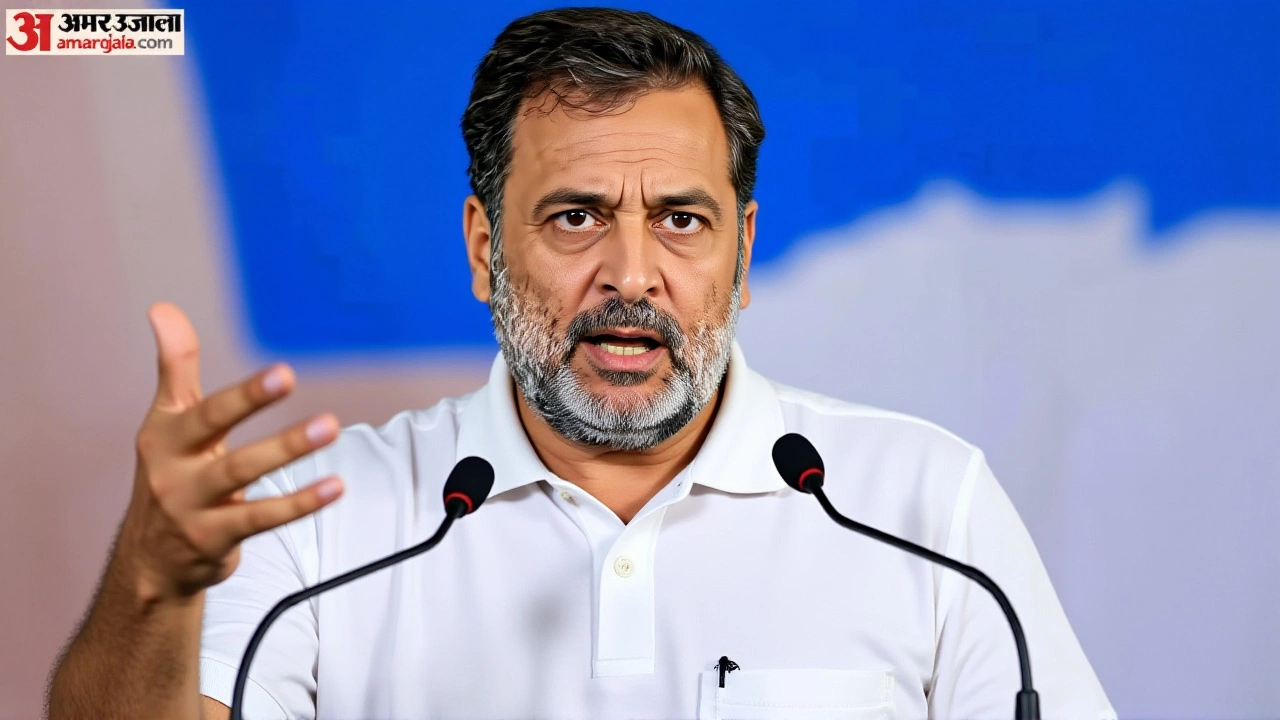
When Rahul Gandhi, Leader of the Opposition in India's Parliament, recently warned that the government led by Prime Minister Narendra Modi might not survive another year, it didn't just spark a debate—it ignited a firestorm. The controversy stems from a nuanced comment about economic hardship that mainstream media outlets quickly simplified into a bold prediction: the ruling government will "fall" within 12 months.
The twist is that Gandhi’s original statement was conditional. He argued that if current economic pressures persist, the administration won’t last. But in the fast-paced world of political commentary, nuance often gets lost. Now, the Bharatiya Janata Party (BJP) is accusing him of spreading anarchy, while supporters see it as a valid critique of rising inflation and unemployment.
The Nuance Lost in Translation
Here’s the thing: Gandhi didn’t say the government *will* fall. He said it *won’t be able to sustain itself* under current conditions. In a discussion on the YouTube program "Janadesh Charcha," the distinction became clear. Around the 597-second mark of the video, the presenter highlighted Gandhi’s Hindi remark: "Given the kind of economic conditions prevailing in the country, and if they remain like this, this government will not be able to survive even one year."
But media headlines skipped the "if." They jumped straight to "will fall." This shift from a conditional warning to a categorical prophecy changed the entire narrative. It turned an economic analysis into a direct political threat. Critics argue this misrepresentation fuels polarization, while others claim it simply highlights the urgency of the situation.
Economic Anger as Political Fuel
Gandhi’s argument rests on concrete data points that resonate with millions of Indians. He cited three main drivers of public discontent:
- Deepening Economic Crisis: Stagnant growth rates affecting small businesses and farmers.
- Rising Inflation: Prices for essential goods continuing to climb, squeezing household budgets.
- Unemployment: A lack of job opportunities creating widespread anxiety among the youth.
He also pointed to fuel price hikes as a compounding factor. When people struggle to afford daily necessities, political loyalty tends to erode. Gandhi isn’t alone in highlighting these issues; independent surveys have shown voter sentiment shifting due to cost-of-living concerns. His prediction is less about magic dates and more about the breaking point of public patience.
BJP Strikes Back with Conspiracy Claims
The reaction from the ruling party was swift and severe. Leaders from the Bharatiya Janata Party accused Gandhi of trying to destabilize the nation. But the attacks went beyond standard political rhetoric. Some commentators linked his statements to George Soros, a billionaire financier often cited in right-wing conspiracy theories globally.
This association is significant. By framing Gandhi’s economic critique as part of a "foreign conspiracy," opponents aim to discredit his legitimacy. It suggests he isn’t acting in India’s interest but is influenced by external agendas. This tactic has been used repeatedly in recent years to marginalize opposition voices. Whether intentional or not, the link to Soros adds a layer of international intrigue to what started as a domestic economic debate.
The Weight of Institutional Authority
Why does this statement carry so much weight? Because of who is saying it. Since June 2024, Gandhi has served as the Leader of the Opposition in the Lok Sabha. This role wasn’t handed out lightly. In the 2024 general elections, the Indian National Congress secured 99 seats, allowing them to reclaim their status as the official opposition for the first time in a decade.
The broader INDIA alliance won 234 seats, signaling a strong challenge to the BJP’s majority. Gandhi’s position gives him a platform that commands national attention. His words are no longer just campaign slogans; they are formal parliamentary critiques. This institutional backing makes his predictions harder to ignore, regardless of whether you agree with them.
Media’s Role in Amplifying Conflict
The "Janadesh Charcha" program noted that mainstream media played a pivotal role in escalating the row. By focusing on the phrase "will fall," outlets created a headline-grabbing narrative that overshadowed the underlying economic arguments. This pattern isn’t new. Sensationalism drives clicks, and conflict drives engagement.
However, this approach risks distorting public understanding. Instead of discussing inflation rates or employment figures, the conversation becomes about power struggles and personal attacks. For voters trying to make informed decisions, this noise can be deafening. The real issue—economic stability—gets buried under layers of political drama.
Frequently Asked Questions
Did Rahul Gandhi explicitly say the Modi government will fall?
No, he did not use those exact words. His actual statement was conditional: he said the government would not be able to "survive" or "last" one year if current economic conditions, such as high inflation and unemployment, persisted. Media outlets paraphrased this as a definitive prediction that the government "will fall," which sparked the controversy.
What economic factors did Gandhi cite for his prediction?
Gandhi pointed to a deepening economic crisis characterized by rising inflation, high unemployment rates, and public anger over fuel price hikes. He argued that these combined pressures are unsustainable for any government and could lead to its collapse if not addressed promptly.
How did the BJP respond to these comments?
The BJP reacted fiercely, accusing Gandhi of spreading anarchy and attempting to destabilize the country. Some leaders also linked his remarks to alleged foreign conspiracies involving George Soros, suggesting his criticism was influenced by external interests rather than genuine concern for Indian citizens.
Why is this statement considered significant politically?
As the Leader of the Opposition in the Lok Sabha, Gandhi holds a formal institutional role gained after the Indian National Congress secured 99 seats in the 2024 elections. His statements carry official weight and reflect the stance of the primary opposition alliance, making his critique a major political event rather than just a casual opinion.
Is there evidence linking Rahul Gandhi to George Soros?
There is no credible public evidence linking Rahul Gandhi to George Soros or any foreign conspiracy. These allegations appear to be rhetorical tactics used by critics to discredit his opposition efforts. Such claims are common in polarized political environments but lack factual substantiation in verified reports.